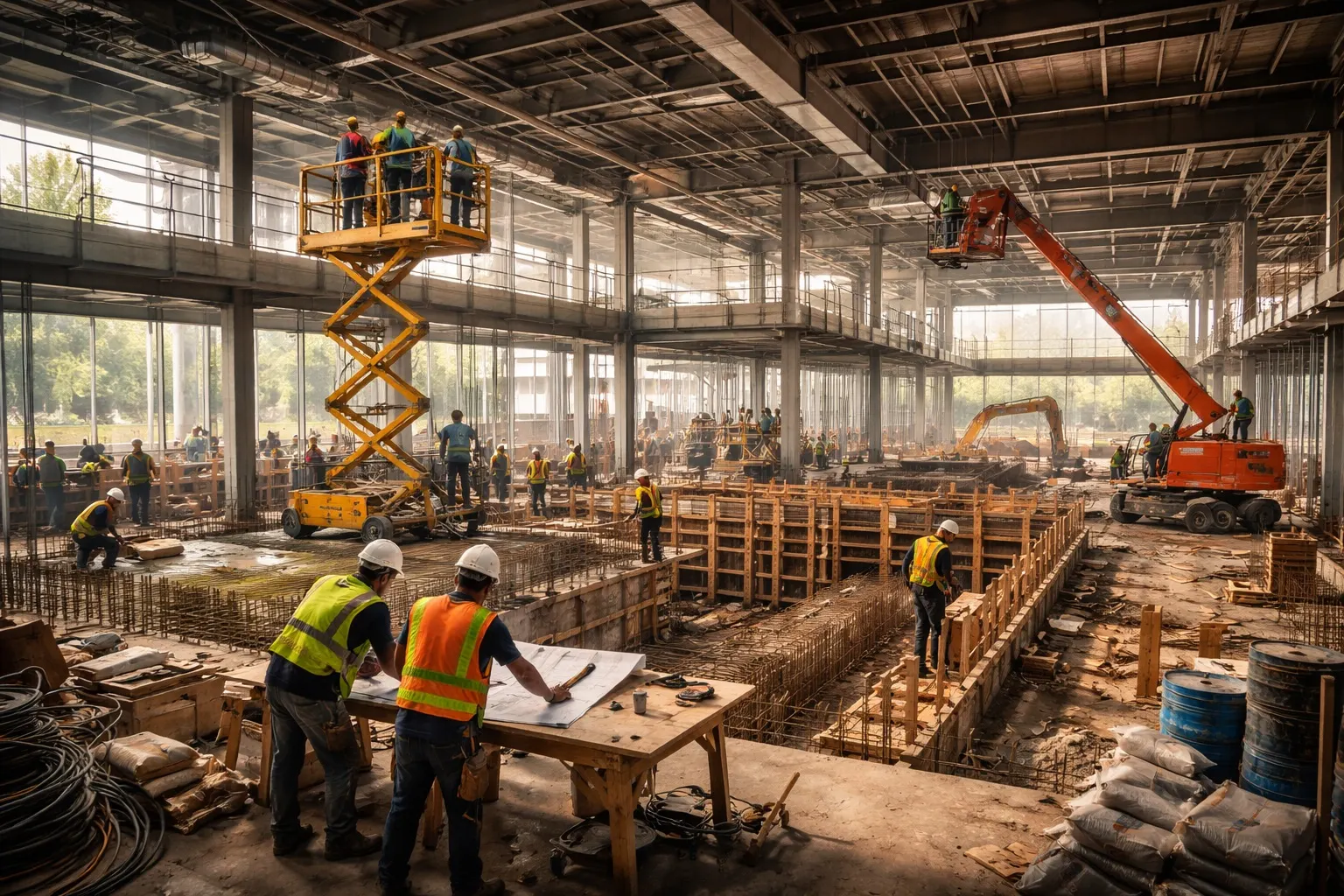
Use less, better
Efficient structural layouts, sensible spans and avoiding over-specification reduce material quantities. This is usually the largest single lever available on a project here.
Climate
What a building is made from carries a carbon cost before anyone moves in — and a maintenance cost long after.
In short
Concrete and steel dominate the embodied carbon of most buildings in this market, and neither is going away. The realistic gains come from using less of them, using them well, and choosing finishes that last rather than finishes that need replacing.
Efficient structural layouts, sensible spans and avoiding over-specification reduce material quantities. This is usually the largest single lever available on a project here.
Locally produced materials reduce transport impact and are easier to replace during maintenance — provided they meet the performance the building needs. We do not treat local sourcing as a reason to accept weaker material.
A finish replaced three times in twenty years carries three times the impact. Specifying for the building's real life, including Kabul's dust and temperature swings, is part of reducing it.
Accurate setting-out, sensible ordering and protecting delivered material from weather and damage reduce waste that otherwise gets paid for twice.
Common questions
Where it meets the performance the building needs, yes — lower transport impact and easier replacement during maintenance. We do not treat local sourcing as a reason to accept material that will not last.
Mostly by using less: efficient structural layouts, sensible spans, and avoiding over-specification. In this market that is a larger lever than material substitution.
Specification is where this is won.
Start a conversation
Tell us what you are considering. We can start with the site, the opportunity and the questions that matter before anything gets overcomplicated.
Discuss your project