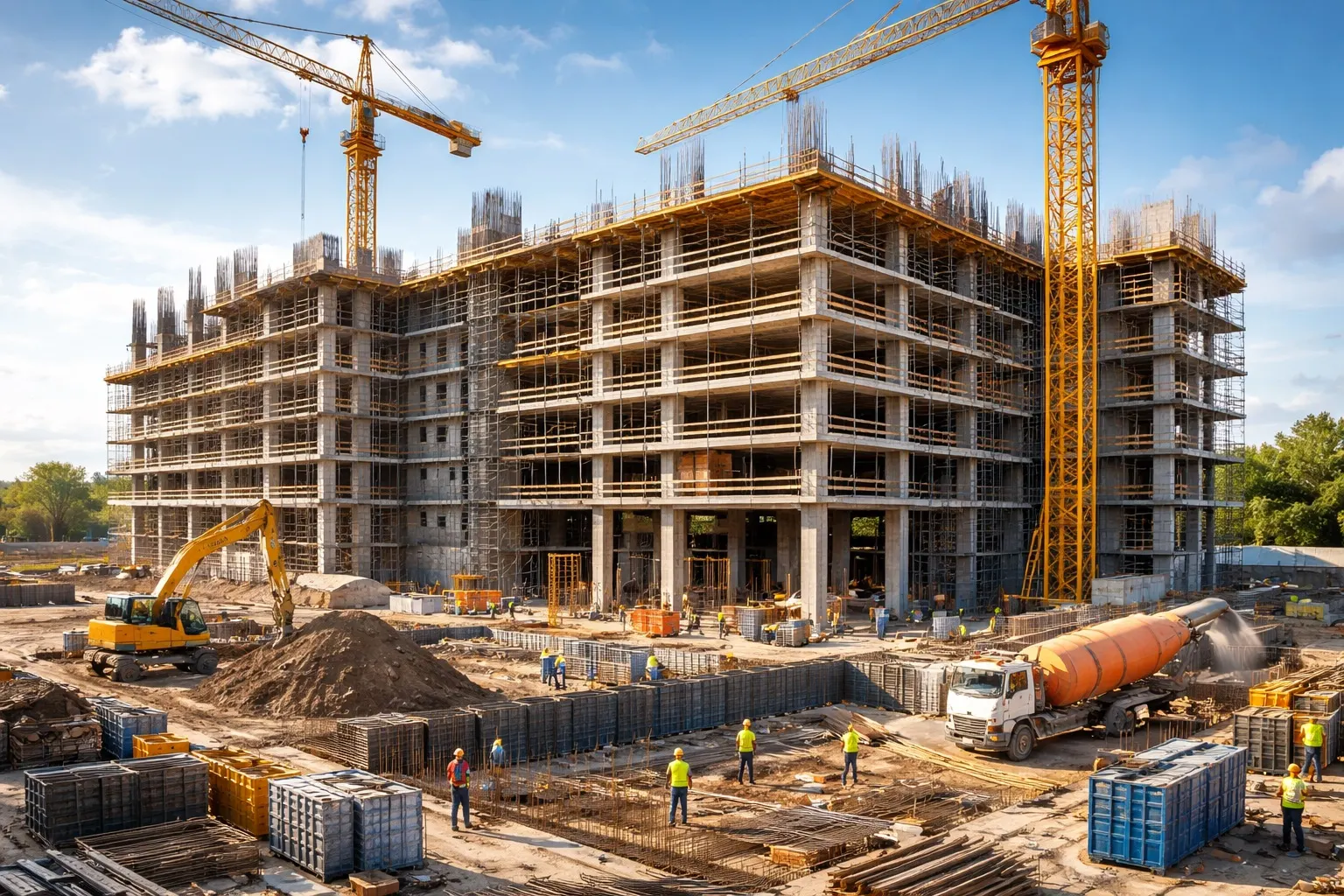
Dust suppression
Damping down, sheeting loads and covering stockpiles. In a city with Kabul's air quality, uncontrolled construction dust is a public health matter, not a nuisance.
Responsibility
Controlling what a construction site releases into the air, the ground and the water around it.
In short
A building site affects its surroundings continuously while it operates. Dust, noise, run-off, fuel and chemical storage, and waste all have straightforward controls; the difficulty is applying them consistently once the programme is under pressure.
Damping down, sheeting loads and covering stockpiles. In a city with Kabul's air quality, uncontrolled construction dust is a public health matter, not a nuisance.
Preventing silt, cement washout and fuel from reaching drains and watercourses, with designated washout and refuelling areas.
Separating what can be reused or recycled, and disposing of the remainder through proper routes rather than the nearest empty ground.
Fuels, oils and chemicals stored with containment, and a practical response when something is spilled.
Common questions
Damping down, sheeting loads and covering stockpiles. In a city with Kabul's winter air quality this is a public health matter rather than a nuisance.
Segregated for reuse or recycling where possible, with the remainder disposed of through proper routes rather than the nearest empty ground.
Judge a contractor by the site.
Start a conversation
Tell us what you are considering. We can start with the site, the opportunity and the questions that matter before anything gets overcomplicated.
Discuss your project