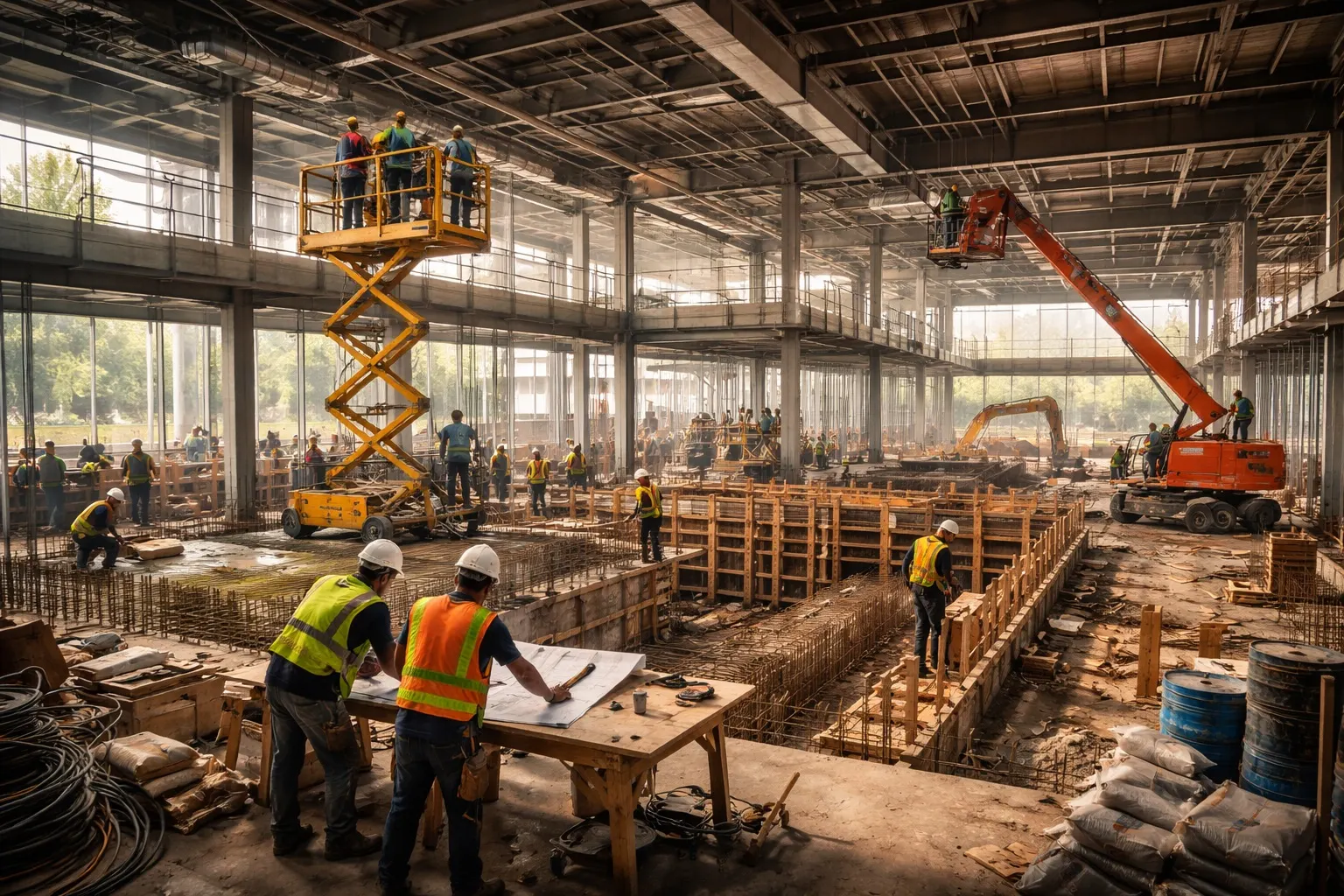
The hazards that actually cause harm
Work at height, lifting and crane operations, excavation and temporary works, electricity, and vehicle movement receive attention proportionate to the harm they can cause.
Responsibility
Nobody should be hurt building a project of ours, and no programme is worth an injury.
In short
Construction is a hazardous industry, and most serious incidents are predictable: falls from height, lifting operations, excavations, and moving plant. Managing them is a matter of planning the work properly and supervising it consistently, not of issuing rules.
Work at height, lifting and crane operations, excavation and temporary works, electricity, and vehicle movement receive attention proportionate to the harm they can cause.
Method and sequence agreed before work starts, with supervision present while it happens. Safety documented after the fact protects paperwork, not people.
Proper access, edge protection and maintained equipment, provided as part of the job rather than treated as an expense to be minimised.
Anyone on site should be able to stop work they believe is unsafe without fear of consequence, and be listened to when they do.
Common questions
Falls from height, lifting operations, excavation and temporary works, electricity, and vehicle movement. These receive attention proportionate to the harm they can cause.
Yes. Anyone who believes work is unsafe should be able to stop it without fear of consequence, and be listened to when they do.
Yes. Standards that stop at our own staff would not be standards.
Safety shows up in the programme.
Start a conversation
Tell us what you are considering. We can start with the site, the opportunity and the questions that matter before anything gets overcomplicated.
Discuss your project