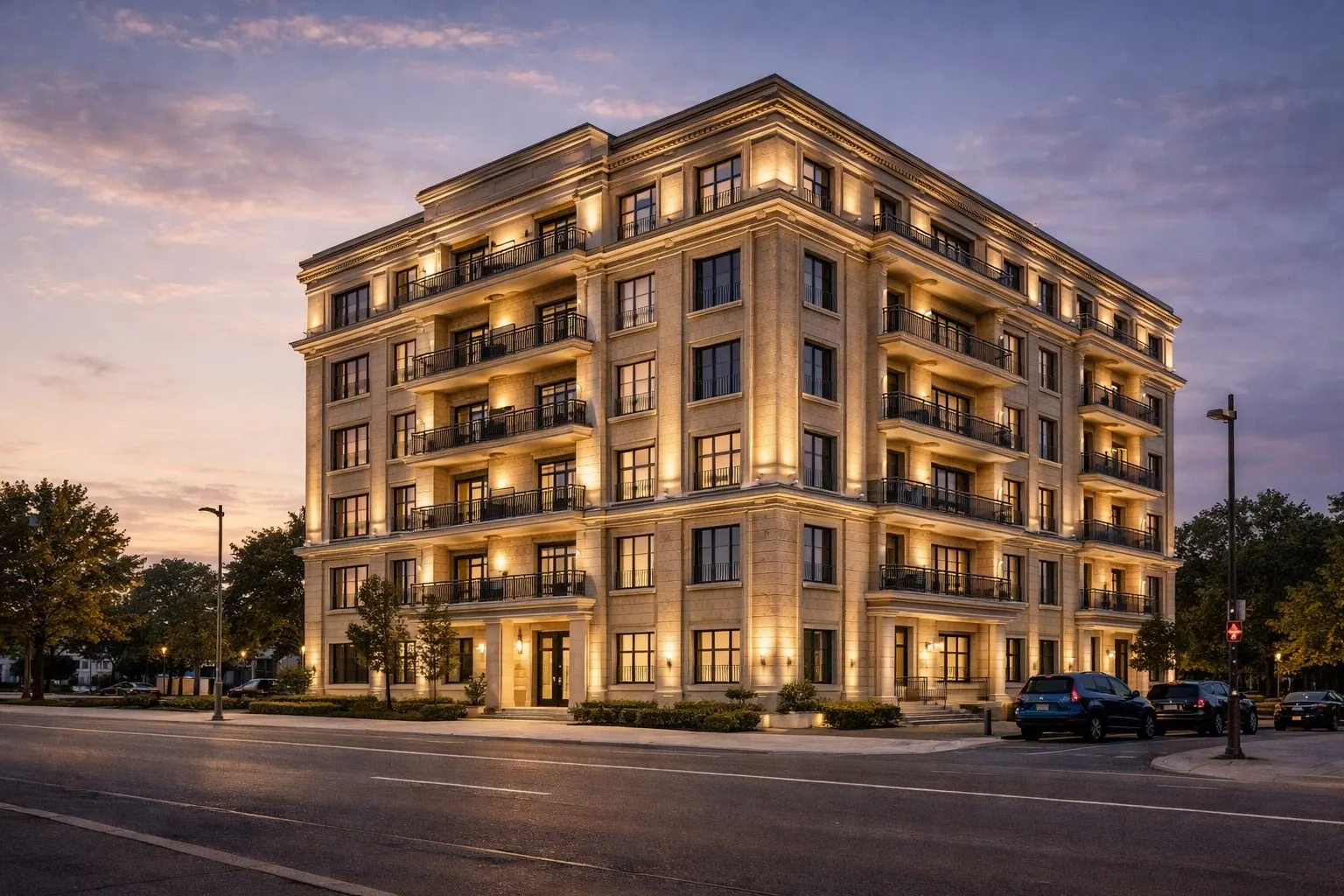
Orientation and massing
Where a building sits on its plot and which elevations carry the most glazing affects heating and cooling demand for its entire life, at no additional construction cost.
Climate
Form, orientation and envelope decide most of a building's lifetime energy use before any equipment is chosen.
In short
Efficiency is not a product you add to a building. It is the accumulated result of decisions about where the building sits, which way it faces, how much glass it carries, how well the envelope is sealed and how the services are laid out. By the time those are fixed, most of the outcome is fixed too.
Where a building sits on its plot and which elevations carry the most glazing affects heating and cooling demand for its entire life, at no additional construction cost.
Insulation continuity, thermal bridging at slab edges and balconies, and realistic airtightness targets do more for comfort and running cost than upgrading a boiler.
Glass gives daylight and view, and loses heat in winter while gaining it in summer. The right ratio and the right shading matter more than the headline specification.
An efficient detail that cannot be built accurately on site will not perform. We prefer details our own supervisors can check and correct while the work is still open.
Common questions
Once the frame is up, most of it is fixed. Orientation and massing are decided at concept; envelope and glazing during design development. After that you are optimising equipment, which is the smallest lever.
Envelope continuity, including thermal bridging at slab edges and balconies. It is the most commonly neglected detail and one of the hardest to correct.
Bring us in at concept.
Start a conversation
Tell us what you are considering. We can start with the site, the opportunity and the questions that matter before anything gets overcomplicated.
Discuss your project