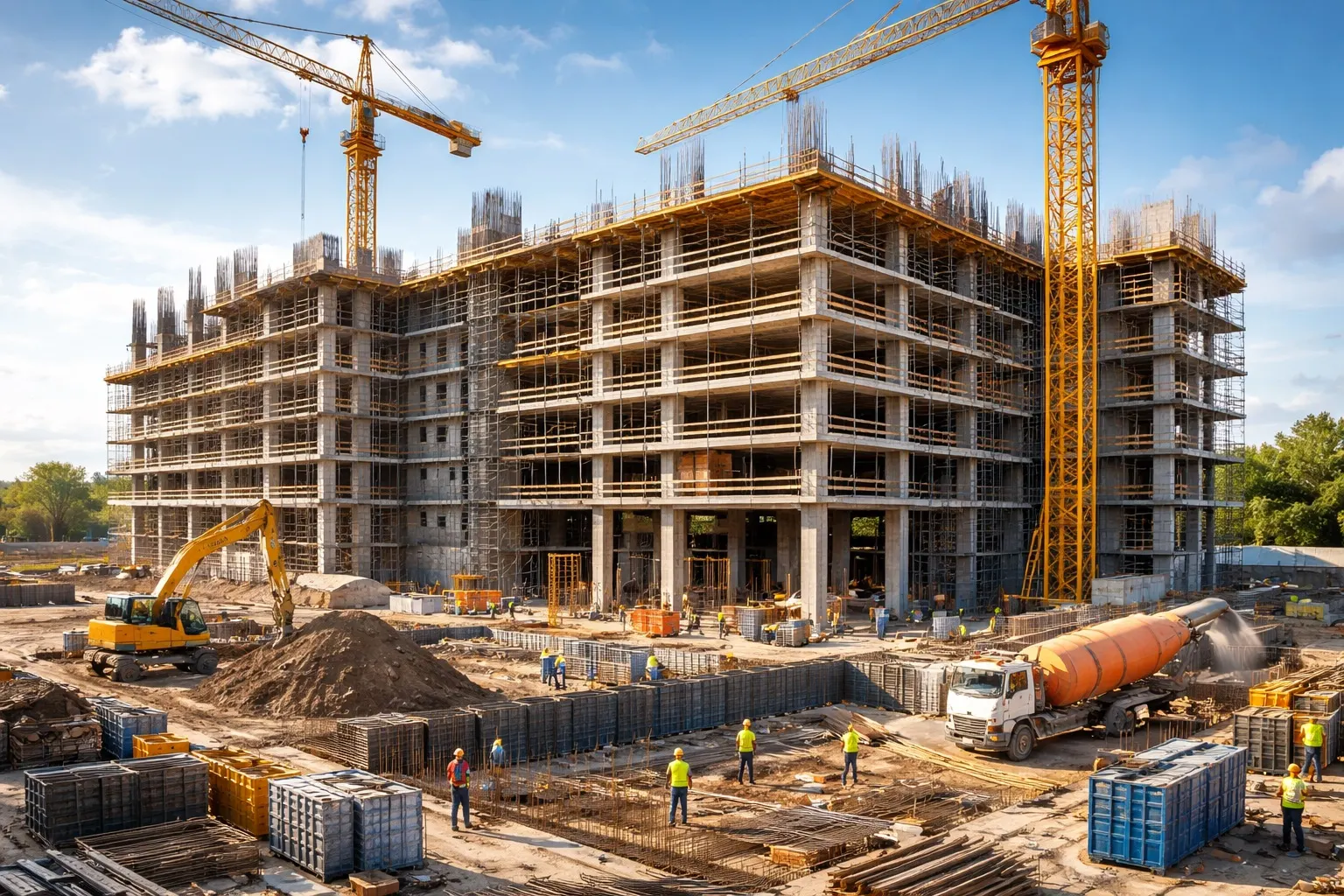
What we assess
Site suitability and access, documentation status, likely project type and scale, buildability, procurement exposure, programme realism and the practical operating life of the finished asset.
Investors
We would rather bring you a project that survives scrutiny than a projection that looks good on a slide.
In short
Investment in construction fails for predictable reasons: an unrealistic programme, a site that could not support the intended use, or a commercial structure that left responsibilities ambiguous. Our work before a project is offered is mostly about removing those three risks.
Site suitability and access, documentation status, likely project type and scale, buildability, procurement exposure, programme realism and the practical operating life of the finished asset.
Roles, contributions, decision rights, reporting obligations and the route to completion are written down before commitments are made, and reviewed by appropriate professionals.
We do not present guaranteed returns, and we do not treat a feasibility study as a sales document. Any figures attached to a specific opportunity should be traceable to stated assumptions you can challenge.
In more depth
Assessment starts with the site rather than the spreadsheet. Access, orientation, ground conditions, documentation status and what the surrounding area actually supports set the ceiling on what any project can achieve. A financial model built before those are understood is arithmetic, not analysis.
From there we look at buildability and programme. A design that cannot be procured with locally available materials and skills, or that assumes an uninterrupted supply chain, will not deliver the programme it promises. We would rather present a longer, defensible timeline than a short one that fails in month four.
Finally, the structure itself. Contributions, decision rights, reporting and exit need to be explicit before capital moves. Ambiguity in a development agreement is almost always resolved in favour of whoever holds more information, which is precisely why it should not be left ambiguous.
Common questions
No. Any figures attached to a specific opportunity are traceable to stated assumptions you can challenge, and they are not guarantees. Treat published return figures in this market with caution generally.
It varies. Some investors want monthly reporting and nothing more; others want to be part of design decisions. Agree which at the start, because changing it mid-project causes friction.
Through documented structure, staged commitments tied to progress, and independent professional review — not through assurances. Ask what happens in the scenarios where things go wrong, not only the ones where they go well.
Yes. Site visits, the assessment work behind an opportunity and the assumptions in any model should all be open to inspection.
Tell us what you are looking for.
Start a conversation
Tell us what you are considering. We can start with the site, the opportunity and the questions that matter before anything gets overcomplicated.
Discuss your project