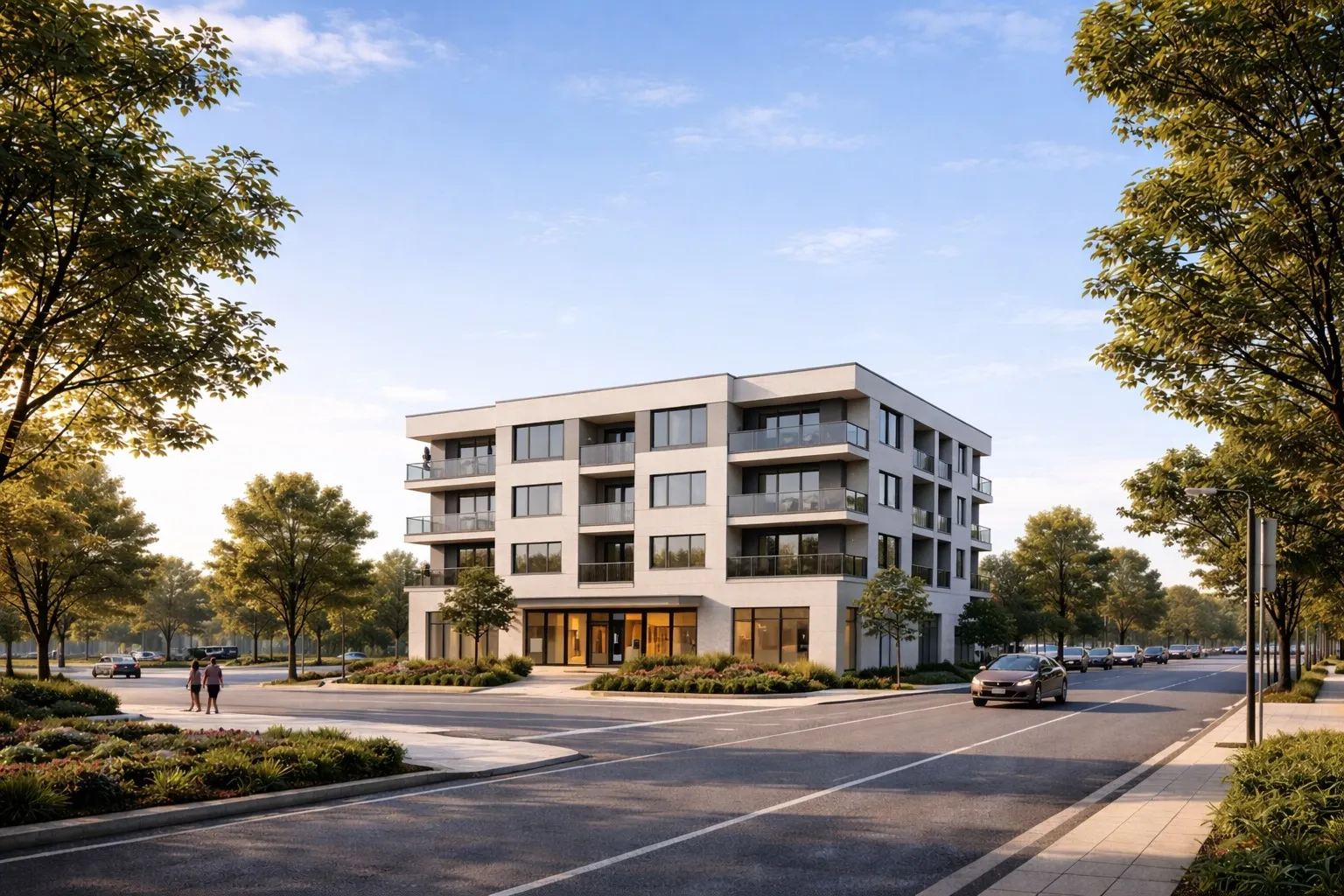
Design for efficiency
Form, orientation and envelope decide most of a building's lifetime energy use before any equipment is chosen.
Sustainability
In Kabul, sustainability is less about badges than about basics: buildings that need less energy, stand up to earthquakes, use water carefully, and are made by people who are treated properly.
Our position
A great deal of sustainability writing in construction is untestable. We have tried to keep this section to things that can be checked on a real project: what the building demands, how it is built, what it is made from, and how people on site are treated.
Where we have not published figures, it is because we do not yet have verified ones. The performance metrics page sets out what should be measured and how, rather than presenting numbers we cannot evidence.
01 — Pillar
Reducing the energy and carbon a building demands, from first sketch to occupied floor.
Form, orientation and envelope decide most of a building's lifetime energy use before any equipment is chosen.
What a building is made from carries a carbon cost before anyone moves in — and a maintenance cost long after.
Reliable, affordable energy is not a given in Kabul. Buildings should be designed with that reality in mind.
02 — Pillar
Building for the conditions Kabul actually has: seismic risk, water scarcity, hard winters.
Designing for the conditions a building will face over its life, not only the conditions of the year it was drawn.
A construction site is a temporary neighbour. How it behaves affects people who never chose to live next to it.
Green space, trees and permeable ground do practical work in a dry, dusty, warming city.
03 — Pillar
How people are treated on our sites, in our business and along our supply chain.
Nobody should be hurt building a project of ours, and no programme is worth an injury.
In a market where trust is scarce, how you deal is as much a product as what you build.
Controlling what a construction site releases into the air, the ground and the water around it.
Who gets hired, who gets trained, and whether the buildings we make can be used by everyone.
Our standards mean little if they stop at our own staff.
04 — Pillar
What we measure, how we report it, and what we are still working to improve.
The measures we believe belong on every project — and a note about what is not yet published here.
Start a conversation
Tell us what you are considering. We can start with the site, the opportunity and the questions that matter before anything gets overcomplicated.
Discuss your project